The Hidden Cost of Retail Flyer Operations
Retail flyers have long been a cornerstone of promotional strategy. They drive traffic, communicate pricing, and influence purchasing decisions at scale.
But behind every flyer lies a complex, often inefficient operational process, one that carries significant hidden costs.
While most organizations track printing and agency fees, the true cost of retail flyer operations extends far beyond production.
The Invisible Cost Layer
Click image to enlarge
Typically:
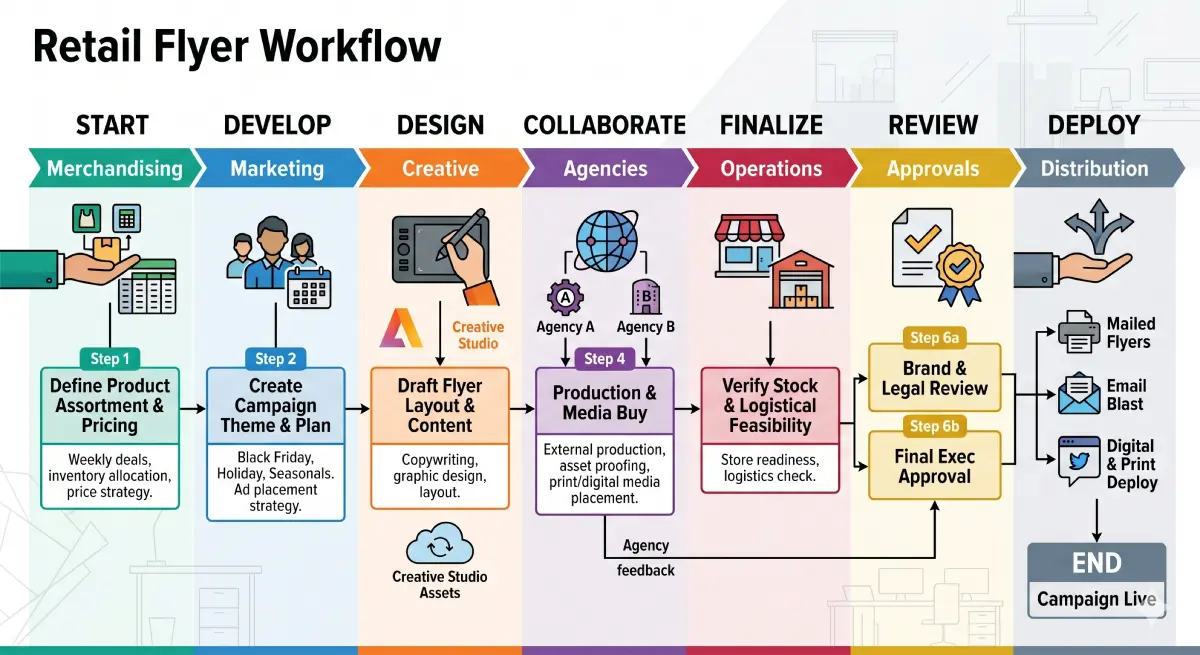
- merchandising teams select products and pricing,
- marketing teams define campaign structure,
- creative teams design flyer layouts,
- agencies finalize outputs,
- and operations teams coordinate execution.
Each step introduces dependencies. Every pricing change or product substitution triggers revisions, approvals, and production rework.
Individually, these steps may seem manageable. Collectively, they create workflows that are:
- time-consuming,
- resource-intensive,
- and difficult to scale.
The Cost of Rework and Delay
One of the most significant hidden costs in retail flyer production is rework.
Click image to enlarge
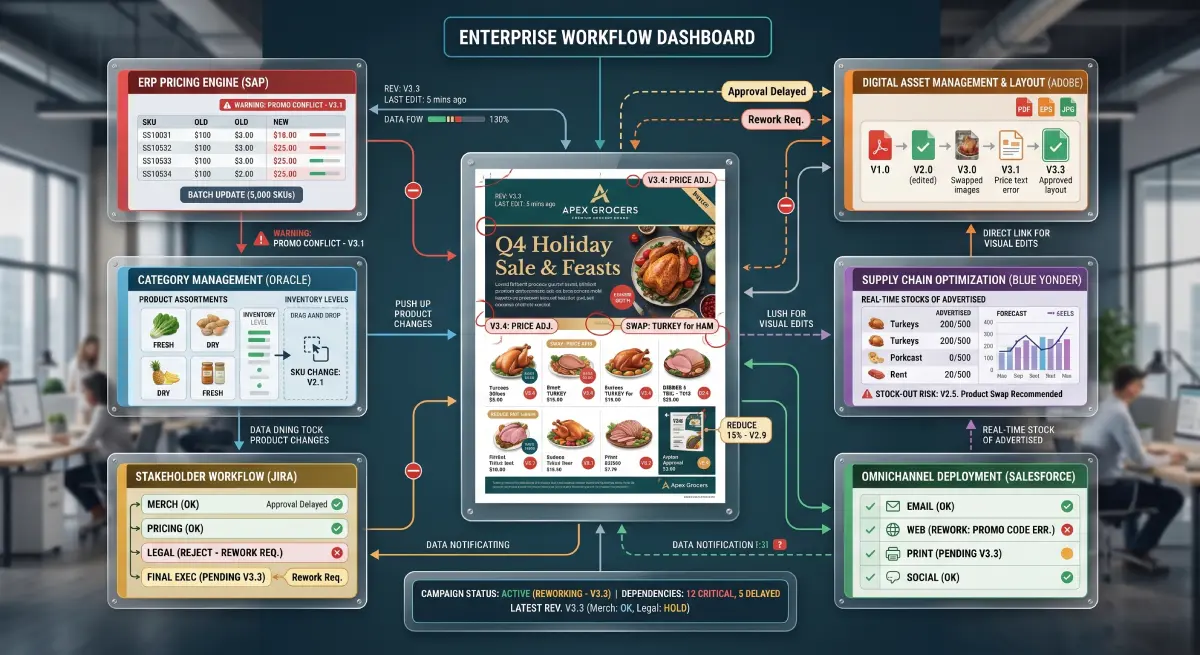
A single change, such as a price update or out-of-stock product can cascade across the entire flyer production workflow:
- creative assets must be updated,
- layouts need adjustment,
- approvals must be revisited,
- and deadlines are pushed.
These inefficiencies compound over time, increasing both direct costs and opportunity costs. In large retail organizations managing high-volume promotional campaigns, even small delays can impact execution speed and campaign efficiency.
The Bigger Problem: Lost Agility
Beyond operational cost, traditional flyer production models limit a retailer’s ability to respond to real-world conditions.
Promotions are often finalized weeks in advance, meaning:
- inventory changes are not reflected,
- demand shifts cannot be addressed,
- and competitive actions go unanswered.
In a market where timing is critical, this lack of agility can directly impact promotional performance and revenue opportunities.
Rethinking Retail Flyer Operations
Click image to enlarge
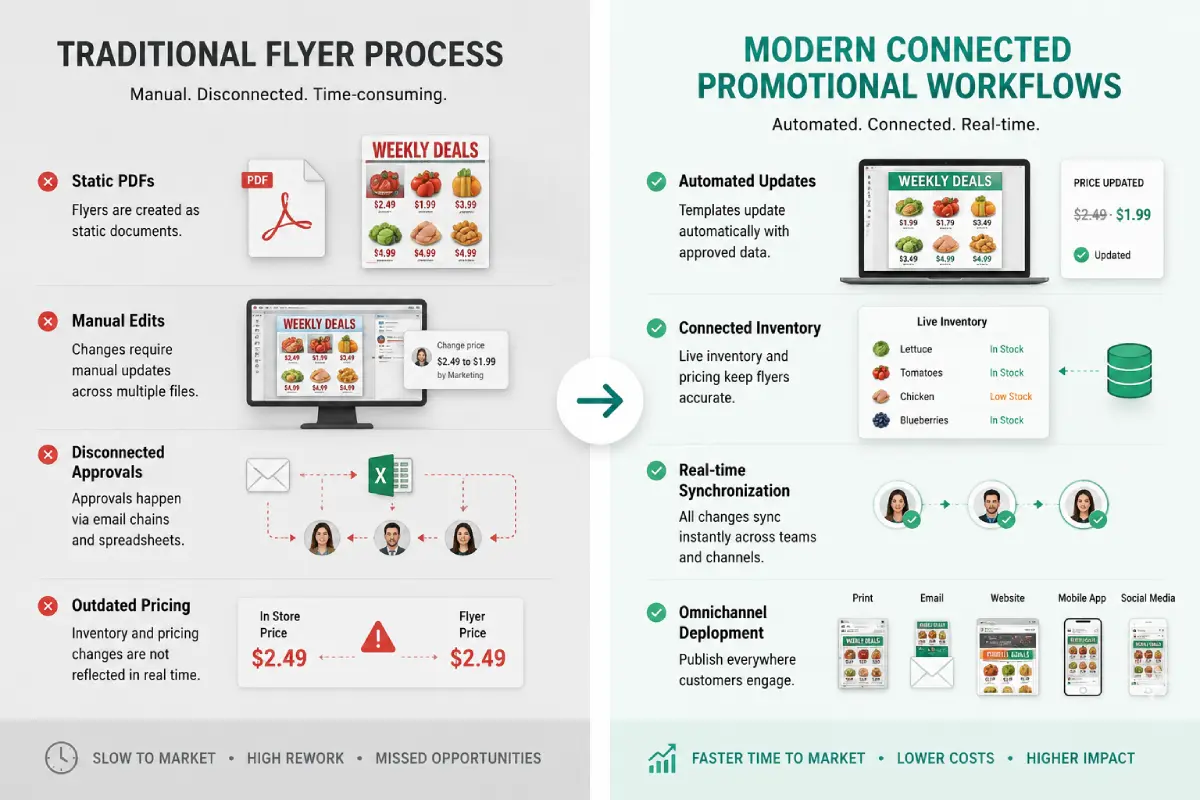
- reduce manual effort,
- minimize production rework,
- accelerate flyer production cycles,
- and adapt promotions in real time.
Frequently Asked Questions About Retail Flyer Operations
Retail flyer operations involve multiple teams, approvals, pricing updates, creative revisions, and production workflows. As changes occur, manual processes and rework can significantly increase operational costs over time.
Pricing updates, product substitutions, inventory changes, approval bottlenecks, and manual revisions are some of the most common causes of delays in flyer production workflows.
Even small promotional changes can impact layouts, creative assets, approvals, and production timelines. This creates repeated cycles of manual updates that reduce efficiency and slow campaign execution.
Retailers are modernizing flyer operations by digitizing workflows, structuring promotional data, and connecting campaign production processes across teams and channels.
Modernizing flyer operations can help retailers reduce manual effort, improve promotional agility, accelerate production cycles, minimize rework, and improve operational efficiency.
Conclusion
The cost of retail flyer operations is not limited to what appears on a budget line.
It is embedded in inefficiencies, delays, and missed opportunities.
Retailers that address these hidden costs can unlock both operational savings and significant revenue potential.
Ready to get started?
TL;DR article summary
Retail flyer operations carry significant hidden costs beyond printing fees, embedded in complex multi-team workflows involving merchandising, marketing, creative, agencies, and operations that create time-consuming, difficult-to-scale processes.
The most significant hidden cost is rework—single pricing changes or product substitutions cascade across entire workflows requiring creative updates, layout adjustments, and approval revisits that compound over time. Traditional models also limit agility since promotions finalized weeks in advance can’t reflect inventory changes, demand shifts, or competitive actions, directly impacting performance and revenue.
Modern retailers are adopting platforms like ARISTID that digitize workflows and structure promotional data, connecting pricing, inventory, and production across channels to reduce manual effort, minimize rework, accelerate cycles, and enable real-time adaptation—unlocking operational savings and revenue potential by addressing inefficiencies, delays, and missed opportunities that don’t appear on budget lines.
Sales Inquiries + 1 (514) 223 3648
sales@munvo.com
© 2026 Munvo is a trademark of Munvo Solutions Inc.