What Dreamforce 2026 Means for Marketers: Munvo on AI Discovery and Marketing Cloud Next
What Dreamforce 2026 Means for Marketers:
Munvo on AI Discovery and Marketing Cloud Next
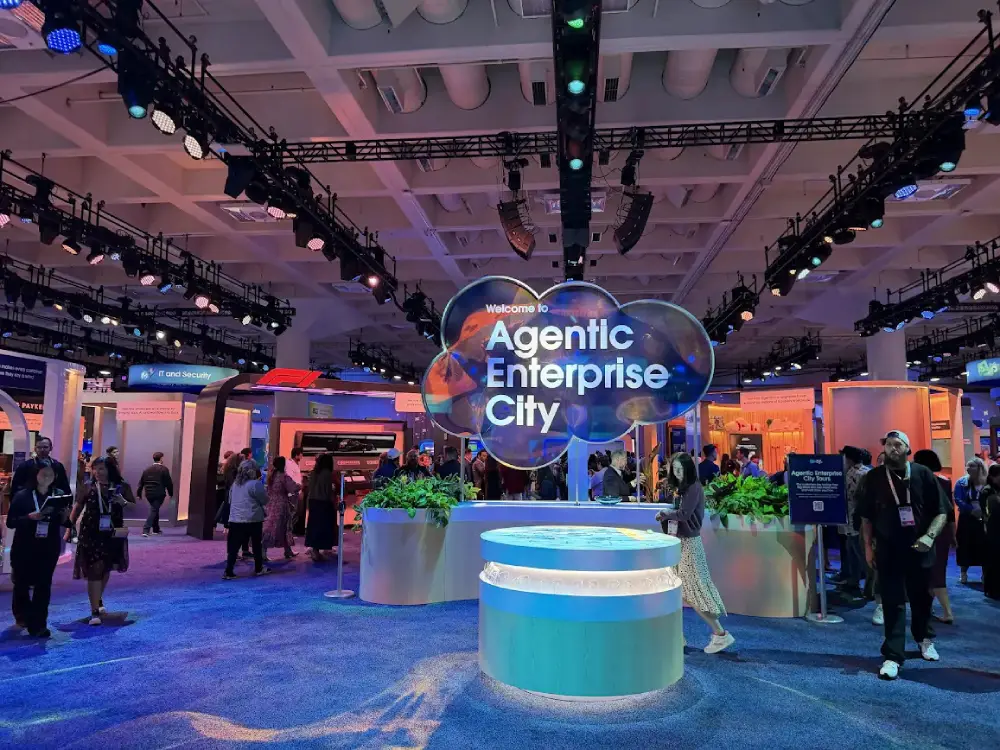
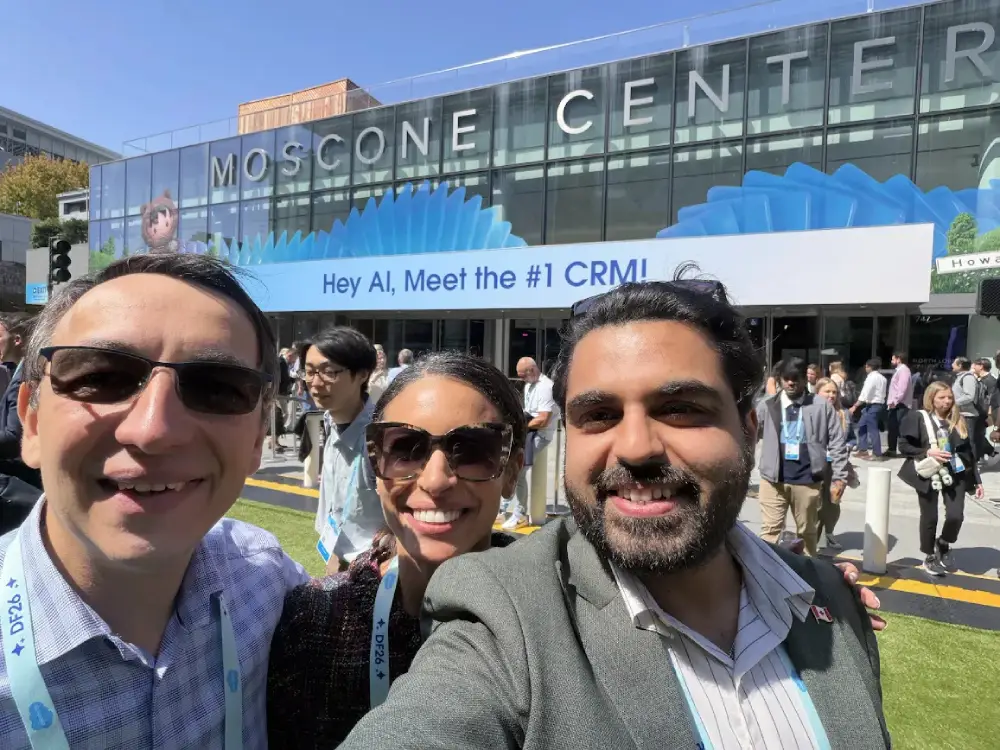
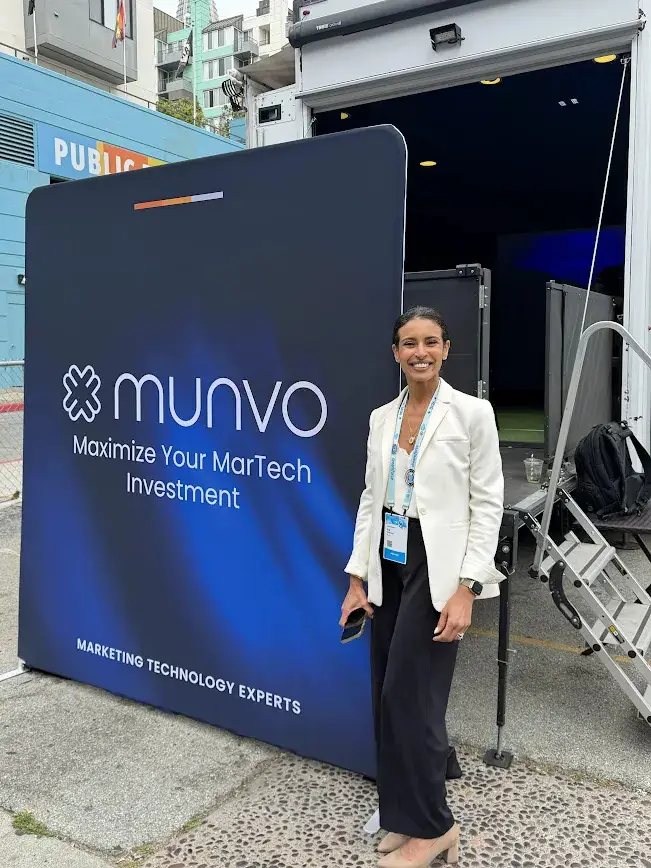
From September 15–17, Munvo was in San Francisco for Dreamforce 2026, attending sessions, meeting with the Salesforce community, and hosting our own Golf Simulator Happy Hour. We saw agents build campaigns, answer customer questions, and follow up with prospects. The demonstrations were impressive. The questions we brought back are more practical: Where does the agent get its information? What happens when that information is wrong? And who takes over when the customer needs a person?
Click images to enlarge
AI Discovery Gives Brands a New First Impression
A customer may ask an AI tool to compare products or explain a service before opening the brand’s website. The answer can draw on product pages, reviews, community discussions, and third-party content. In that moment, the brand is being described by someone else, or something else.
Salesforce reported a 200% year-over-year increase in consumers using agentic search as the first stop in their shopping journey. Contentful likewise notes that content now serves two audiences: people and the answer engines using it to explain a brand.
For Munvo, this expands the content audit. We would ask whether an AI answer describes the brand accurately, which sources it cites, and whether old or inconsistent pages are creating the wrong impression. A mention is useful; an accurate answer supported by the brand’s best information is better.
Commerce teams have a related task. Product descriptions, inventory, availability, and policies must agree across systems and be readable by crawlers. Ahead of Cyber Week, reviewing robots.txt and the product information accessible to non-human traffic is a sensible first step. Customers may increasingly research or buy within an AI chat, but they still need reliable information and control over the purchase.
Contentful Makes Content Architecture a Salesforce Conversation
Salesforce completed its acquisition of Contentful on September 1. Contentful brings structured, reusable content into a platform already holding valuable customer context. In practice, that could help teams maintain one approved product description or policy and use it across a site, app, campaign, and agent response.
Contentful’s Palmata adds a way to examine how AI answer engines represent a brand: whether it appears, whether it is cited, which sources influence the response, and which content changes may help. A Dreamforce demo with a fictional footwear brand showed why those measures differ. The brand appeared in 62% of answers but received citations in only 26%.
Munvo’s read is that teams should inspect the content behind their visibility numbers. If a warranty page causes an AI tool to misstate a policy, improving that page may do more for brand perception than producing another broad article. The Contentful announcement gives Salesforce customers a reason to revisit how they create, approve, update, and distribute content, not just where they publish it.
A Fast Response Needs the Right Customer Context
Salesforce research found that 73% of customers expect better personalization as technology advances, yet 55% say dealing with different departments often feels like dealing with separate companies.
That disconnect does not disappear when an agent enters the journey. It can become more visible. An agent might follow up instantly after an event while missing an open sales conversation or a recent service issue. The response is fast, but the company still appears not to know its customer.
A Qualified case study discussed at Dreamforce described an AI sales development agent using Salesforce company information, buying history, and live intent signals for post-event follow-up. According to the example shared, it generated four times more pipeline from the same event spend. The valuable detail is the context available to the agent—and the handoff to sales when a prospect is ready.
This is where Munvo’s Salesforce Data Cloud work becomes relevant. Before designing an agent’s message, we would map which customer signals exist, where they live, how current they are, and who needs them next. The first use case can be narrow. The data still has to be trustworthy.
Formula 1 showed another approach at Dreamforce. Its Agentforce assistant answers fan questions using approved information brought together through Data 360. It adjusts the depth of an explanation while staying within the content it is allowed to use. Good personalization depends on knowing both what the agent should know and what it should not claim to know.
Marketing Cloud Next calls for a use case, not a rushed migration
Marketing Cloud Next is a significant part of Salesforce’s direction for agentic marketing. Existing Marketing Cloud Engagement and Account Engagement customers can access newer capabilities alongside their current work; Salesforce says an immediate migration is not required.
For a Munvo client, the first discussion would therefore be about the work, not the product switch. Is the goal faster event follow-up? Better coordination across channels? More relevant account-based campaigns? We would define the outcome, review the data it requires, and then assess what the current Salesforce setup can support.
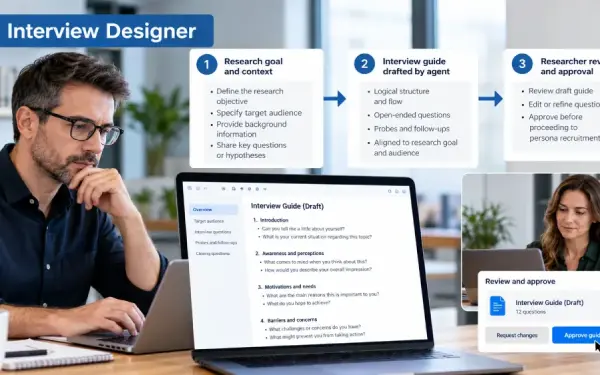
Campaign Agent makes that conversation concrete. Marketers can set a goal and provide approved brand guidance; the agent can help assemble a campaign and adapt content, timing, and channels as customers respond. People remain involved in review and approval.
More automated decisions also require coordination. If sales, marketing, and commerce agents each act without a shared view of the customer, the result can be too many messages or conflicting ones. Before deploying them, teams need agreement on targeting, contact frequency, account ownership, and escalation. We would measure qualified engagement, pipeline, and customer response, not the number of assets an agent produces.
Munvo’s Golf Simulator Happy Hour
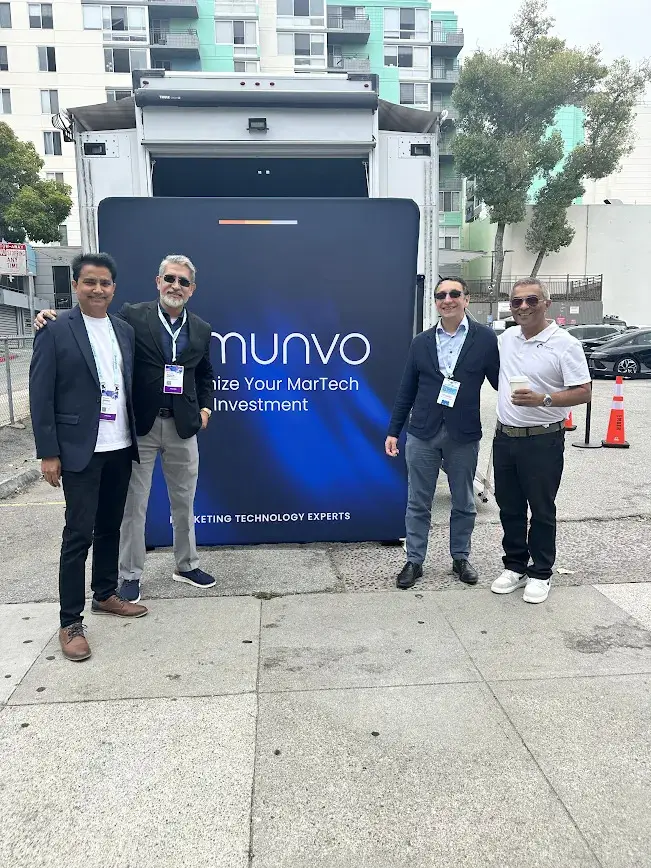
On September 16, Munvo hosted a Golf Simulator Happy Hour during Dreamforce. Between rounds of simulator golf, we caught up with clients and partners and met new people from the Salesforce community. It gave us a chance to move beyond the ideas on stage and talk about the data, marketing, and customer experience challenges organizations are working through right now.
Click images to enlarge
The First Move After Dreamforce
Pick one customer interaction that is not working as well as it should. It could be a prospect waiting too long after an event, a shopper seeing conflicting product information, or an account receiving messages from teams that have not coordinated with one another.
Then work backward: identify the data and content that interaction needs, decide what an agent can handle, and define when a person steps in. Measure whether the change improved the customer experience and the business result. For some teams that will mean meetings and pipeline; for others it will mean answer accuracy, customer sentiment, or stronger visibility in AI-generated responses.
Ready to get started?
TL;DR article summary
Dreamforce 2026 revealed AI agents are reshaping customer journeys, but success requires trustworthy customer data, accurate content, and human oversight—not just faster automation.
Brands now face a critical question: AI answer engines are customers’ first touchpoint before visiting websites. A 200% year-over-year increase in agentic search means brands must audit content accuracy, ensure product information syncs across systems, and verify AI citations reflect brand-approved sources—not just appear in answers. Salesforce’s acquisition of Contentful enables structured, reusable content across channels and agents, shifting focus from publication to content architecture and accuracy.
However, agents can only succeed with complete customer context; 73% expect better personalization yet 55% say departments feel disconnected. The key: map which customer signals exist, ensure they’re current and trustworthy, and coordinate across sales, marketing, and commerce agents to avoid conflicting messages—measuring qualified engagement and customer experience, not just asset production.
Sales Inquiries + 1 (514) 223 3648
sales@munvo.com
© 2026 Munvo is a trademark of Munvo Solutions Inc.