From Tools to Teammates: Architecting the Connected Enterprise for AI Coworkers
From Tools to Teammates:
Architecting the Connected Enterprise for AI Coworkers
The enterprise relationship with artificial intelligence is reaching a major turning point: we are moving past isolated chatbots and towards true AI coworkers.
In simple terms, an AI coworker is an autonomous digital teammate designed with specific roles, persistent memory, and the ability to take action.
Unlike traditional automation that follows rigid scripts, or early generative tools that only answer prompts, AI coworkers can understand a project brief, execute multi-step tasks across enterprise software, and hand off finished work for human approval.
This changes how companies operate by shifting human talent from manual execution to strategic direction, creating a hybrid workforce where teams direct and AI delivers.
As we look at unlocking these operational changes, it’s crucial to note that an AI teammate is only as capable as the system supporting it. To deploy reliable AI coworkers across environments like Adobe CX, organizations need three core technical foundations:
- Centralized Metadata: The shared context layer across planning and asset management that keeps AI grounded in real business rules and brand standards.
- Model Context Protocol (MCP): A standardized open protocol that lets AI models securely connect to and execute actions across enterprise tools without custom code.
- Unified Tool Integration: Connected workflows that eliminate product silos across content, work management, and analytics so agents can work end-to-end.
In this article, we break down how these pieces fit together and what it takes to build a connected foundation for the agentic enterprise.
AI Agents as Coworkers: From Tools to Teammates
The shift from software tools to AI coworkers begins with how we define work inside the enterprise.
In a traditional setup, marketing and operations teams manage static workflows where every handoff, data query, and asset creation step requires manual effort.
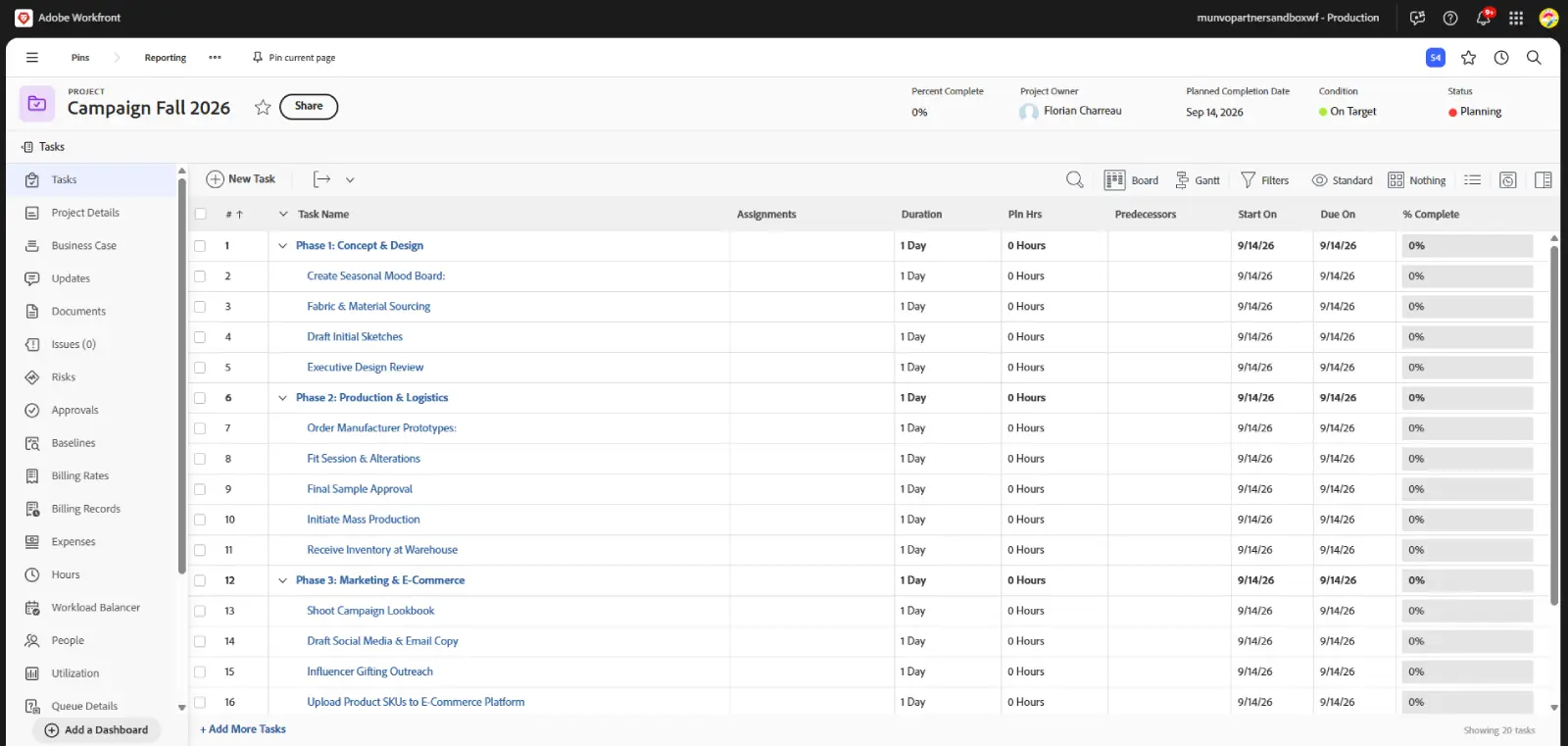
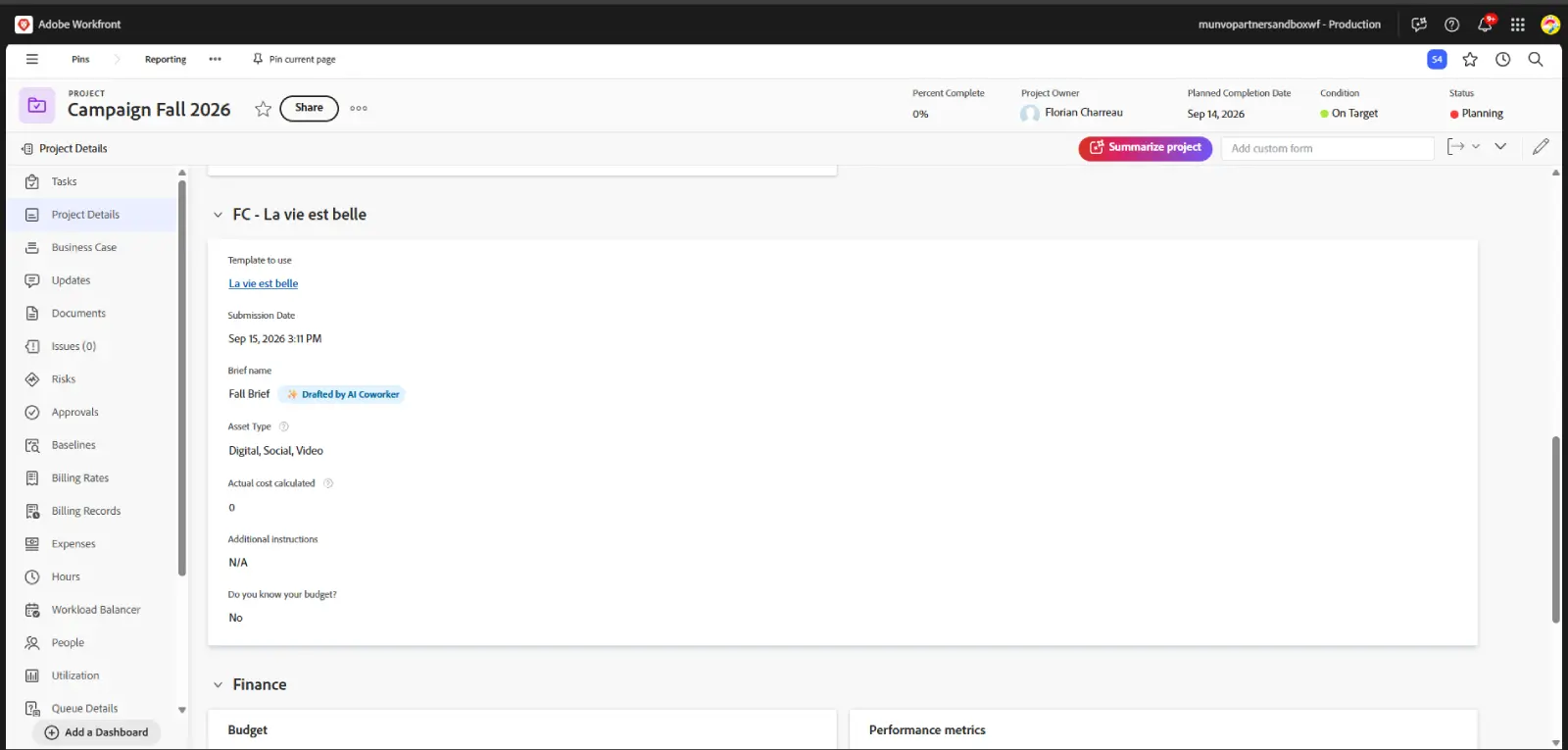
With the arrival of autonomous agents, such as native Adobe Creative Agents or external models connected to Workfront, tasks can be assigned directly to digital collaborators. These agents can draft initial campaign briefs, assemble localized creative variations, or check asset compliance against brand guidelines as long as they are supported by a strong technical foundation.
1. Centralized Metadata: The Foundation of AI Context
For an AI coworker to deliver accurate work, it must understand the business environment it operates in. Without structured context, even the most advanced models will produce generic copy, misinterpret campaign objectives, or generate off-brand assets. This is where centralized metadata becomes the backbone of the agentic enterprise.
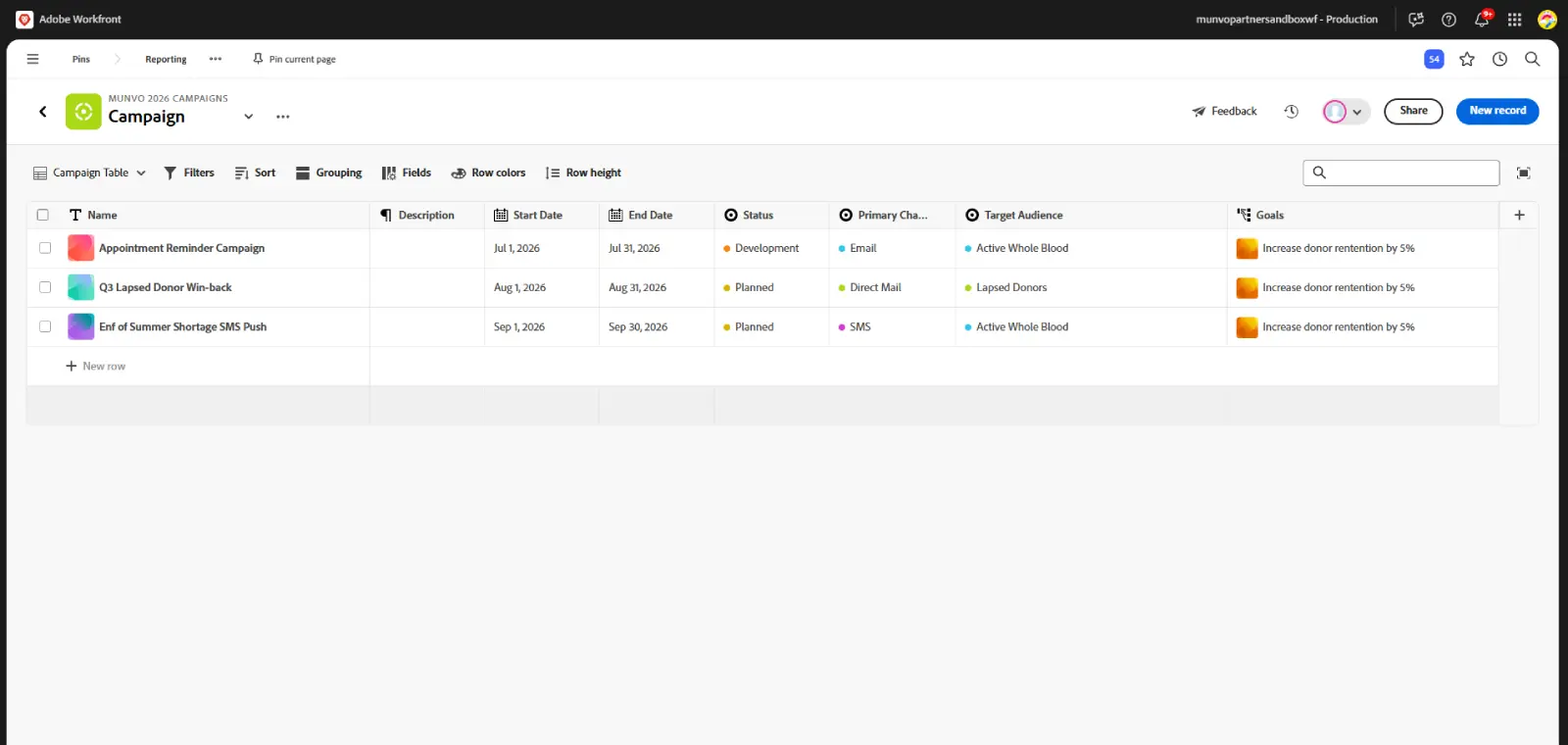
By uniting metadata across portfolio planning tools like Workfront Planning and digital asset repositories like AEM Assets, organizations establish a single source of truth for campaign taxonomies, audience definitions, and brand rules.
When an AI coworker is assigned a task, it references this shared metadata layer to understand the exact scope, target market, and compliance requirements of the project.
This structured context drastically reduces hallucinations, ensures consistency across distributed teams, and provides human reviewers with clear, traceable references to verify that every output adheres to enterprise standards.
Click image to enlarge
2. Model Context Protocol (MCP): Standardizing AI Tool Interactions
Once metadata provides the context, AI coworkers still need a secure, reliable way to interact with enterprise software. In the past, connecting language models to business tools required building and maintaining fragile, custom point-to-point APIs for every application.
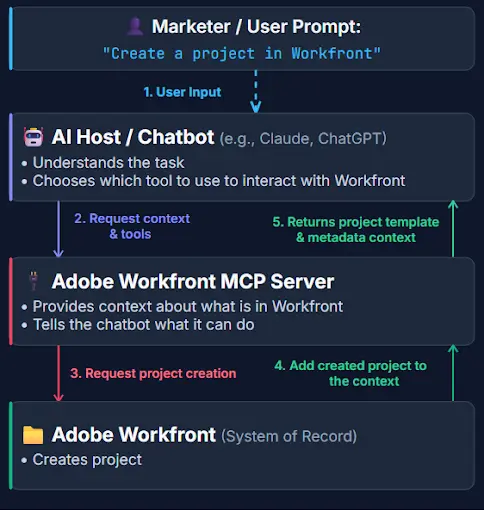
The Model Context Protocol (MCP) solves this problem by acting as an open standard, universal connector between AI models and enterprise platforms.
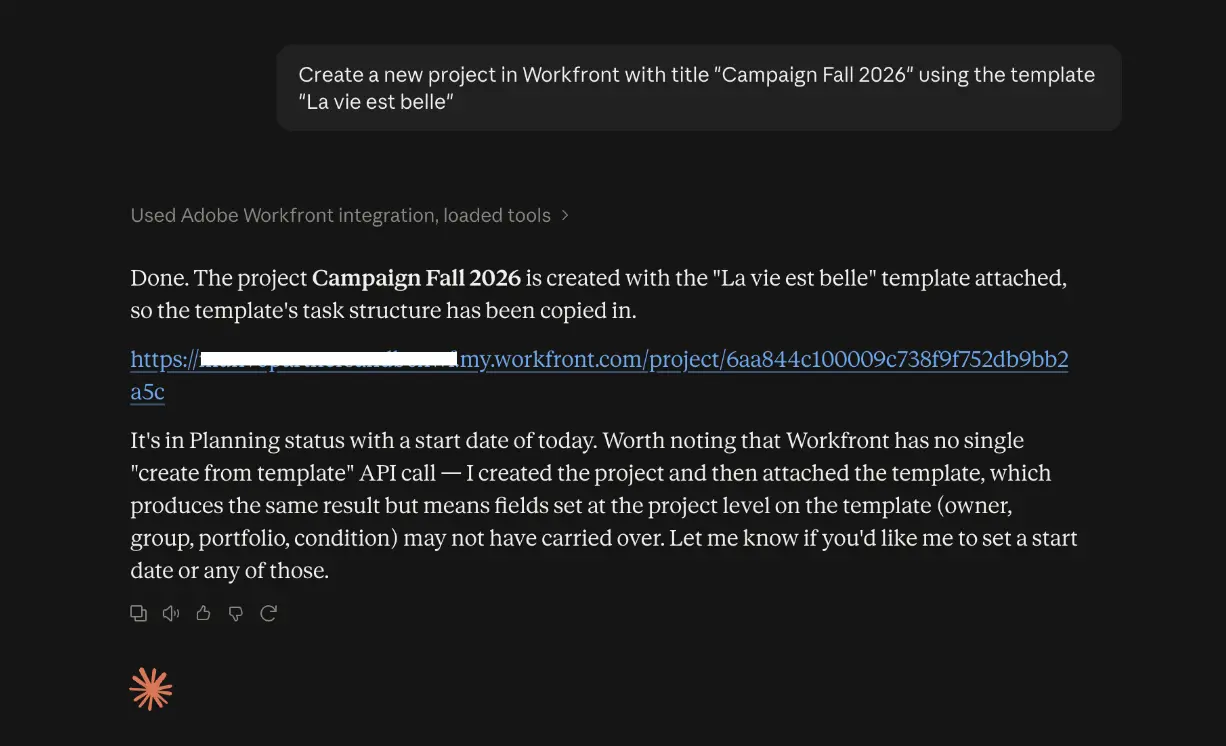
In the Adobe ecosystem, MCP servers expose controlled, typed capabilities from tools such as Adobe Experience Manager (AEM), Workfront, Adobe Journey Optimizer (AJO), or Adobe Analytics. This allows both external frontier models (like Claude or ChatGPT) and native Adobe agents to query project timelines, inspect asset parameters, and stage new content variations using standard commands.
Crucially, MCP enforces strict security and operational boundaries by separating AI reasoning from system execution.
Instead of granting an AI model direct, unrestricted database or administrative access, MCP operates through permissioned, auditable actions tied to user credentials.
An AI coworker can use an MCP tool to generate a localized page launch in AEM or update a project status in Workfront, but it cannot publish live content without authorization.
Click image to enlarge
Click image to enlarge
3. Unified Tool Integration: Connecting the Adobe CX Ecosystem
The final piece of the agentic foundation is dismantling the walls between individual software platforms. In many enterprise environments, tools like Adobe Experience Manager (AEM), Journey Optimizer (AJO), Customer Journey Analytics (CJA), and Adobe Workfront operate as distinct silos.
When systems cannot communicate smoothly, AI coworkers hit roadblocks, and marketing teams are forced to spend valuable time copying data, re-uploading assets, and manually updating project boards.
Unified tool integration creates a connected operational fabric across Adobe CX Enterprise. This allows data, customer insights, and digital assets to flow freely across the entire lifecycle, from initial planning down to real-time customer touchpoints.
With an integrated ecosystem in place, AI coworkers can execute connected, multi-step workflows without manual handoffs between systems. For instance, an agent can analyze campaign performance trends in CJA, draft an updated project brief in Workfront, and prepare audience-specific content variations in AEM for human review.
However, connecting these platforms requires organizations to address underlying technical debt and establish clear review gates. Automated data flows accelerate production, but final campaign deployments and customer-facing changes must still pass through human-led validation checkpoints.
By pairing unified integrations with robust human governance, enterprises create a scalable, agile marketing engine where technology handles the operational coordination and human leaders maintain total control over brand quality and customer experience.
Click image to enlarge
Human-In-The-Loop: Balancing AI Automation with Governance
Building the Foundation for the Agentic Future
The rise of AI coworkers marks a defining shift in marketing operations, but sustainable success does not come from rushing into unmonitored automation.
True enterprise agility relies on a balanced ecosystem: centralized metadata to provide rich context, MCP to establish secure communication, and unified tool integration to eliminate operational friction across Adobe CX.
Most importantly, keeping human expertise firmly in the loop ensures that brand integrity, strategic intent, and quality standards remain uncompromising.
Organizations that invest today in clean data foundations, standardized protocols, and human-guided workflows will be the ones that turn autonomous AI from a novelty into a lasting competitive advantage.
Munvo can help you connect your data, content, workflows, and Adobe Experience Cloud solutions to support secure, effective AI collaboration.
TL;DR article summary
Enterprise AI is evolving to autonomous AI coworkers—digital teammates executing multi-step tasks while humans focus on strategy and oversight.
Three Technical Foundations:
- Centralized Metadata: Single source of truth for campaign rules, audiences, compliance—grounds AI in business context, reduces hallucinations
- Model Context Protocol (MCP): Standardized secure connector between AI and enterprise tools with permissioned, auditable actions—no direct database access
- Unified Tool Integration: Connects Adobe CX platforms (AEM, Journey Optimizer, Analytics, Workfront) enabling end-to-end workflows without manual handoffs.
Human-In-The-Loop Governance:
- Humans remain decision-makers evaluating outputs, refining tone, approving deployments
- AI handles operational coordination; humans maintain total control over brand quality and customer experience
- Organizations with clean data, standardized protocols, and human-guided workflows turn AI coworkers into lasting competitive advantage while preserving brand integrity
Sales Inquiries + 1 (514) 223 3648
sales@munvo.com
© 2026 Munvo is a trademark of Munvo Solutions Inc.